


Time for success
Another week, another large offshore wind farm financing. For a sector in dire straits, it still keeps giving in terms of deal flow. Since Covid and the problems with global supply chains, the sector has been hit by various setbacks but it still keeps bouncing back.
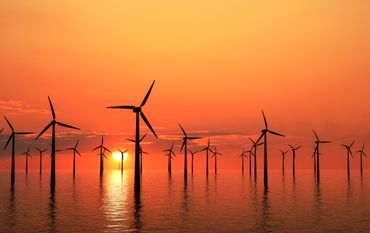
The latest wind farm developer to announce knocks was Northland Power, which said delays to commissioning the turbines at the 1GW Hai Long offshore wind project in Taiwan could impact the pre-completion revenues of the company by US$150m–$200m.
In addition it booked a US$527m impairment on its Nordsee One project in Germany, but this was due to the scheme moving from a subsidised regime to market pricing in 2027 – an issue not too many offshore projects have yet faced given it is still a young industry.
Northland was a pioneer in the industry. It financed the first major scheme in Poland securing a €4.4bn debt for its 1.2GW Baltic Power scheme in 2023. This week the last of the four initial Polish deals reached financial close – the 390MW BC Wind scheme being developed by the Engie/EDPR Ocean Winds joint venture, which raised a €2bn, 23-year loan.
Syndication of the deal showed no real slowdown in bank appetite for the sector although the EIB did contribute €600m and Poland's development bank BGK and Spain's development bank ICO chipped in. But there was no export credit backed tranche.
It is easy to look at the recent negative side of the offshore sector – cost overruns and delays and even restructurings in one or two cases, too-highly-priced bids for projects a few years back, schemes handed back, tenders failing, developers pulling out. And then, of course, don't mention the US.
But the proponents press on. Certainly the shakeout, if that is what it is, will be beneficial for those now looking to get involved. LNG is all the rage right now but oversupply beckons. Data centres, well that sector has created the boom to top all booms.
The offshore wind sector needs to start trumpeting its success if it is to move forward. Some decent research on how the sector is serving the grid would be a start.
Net zero is still an important point but the ability to generate vast amounts of power is in addition a plus point. Reliable supply is a key issue and while the battery storage boom has been pushed forward by solar, offshore wind needs balancing too. Northland has just bought a 300MW/1.2GWh scheme in Poland.
Japan is an interesting offshore market. All began well when the Mitsubishi/Chubu Electric team cleaned up in the 1.7GW round one tender in 2021 but they have subsequently pulled out as costs doubled. Still the procurers, the Ministry of Economy, Trade & Industry and the Ministry of Land, Infrastructure, Transport & Tourism, push on.
Last week they released a document titled “Measures to Ensure the Successful Completion of Offshore Wind Projects,” containing a suite of reforms aimed at securing delivery of the projects awarded in 1.8GW Round 2 and 1.1GW Round 3.
"Japan holds vast offshore wind potential and cannot afford to miss its chance to become an offshore wind leader, especially within the Asia Pacific region. To put the industry back on a growth trajectory, Japan must pursue auction reforms, reassess offtake mechanisms, and remove critical market bottlenecks," the ministries said.
The market sounding for one Round 2 scheme has already started among project lenders as Round 2 schemes are due to be operational between June 2028 and August 2029. Japan was seeking a lot of floating capacity as opposed to fixed bottomed but floating remains technically challenging and expensive.
That said offshore wind is attractive for Asian countries such as Japan, South Korea, Taiwan and the Philippines, which have few natural energy resources.
The first tender for offshore wind projects is beginning in the Philippines. The Department of Energy is offering 3.3GW for delivery between 2028 and 2030. “Offshore wind can anchor our long-term clean energy transition. GEA5 signals the Philippines is ready to compete for global investment,” said energy secretary Sharon S Garin.
Given the problems with offshore wind tenders elsewhere in the world, it will be interesting to see how this one shapes up.
At least 16 offshore wind projects have already been proposed in the country. One PF banker in a domestic bank told PFI that it would not be a surprise if not all of the offered capacity will be taken as there might be a wait-and-see stance by some players. But foreign banks could come in to back their clients.
Offshore wind in the US is off the cards for the time being. In Europe there have been various failed tenders but governments are seeking to make changes in a similar mode to Japan. The outcome of the UK AR7 contract for difference round will be a major signal. The bids have already been submitted, the die is cast – except if the government allows extra schemes on a value for money basis. That calculation could be the sign of success or failure.
