


Transmission and the REZ structures
Allens' infrastructure, energy and project finance specialists Nicholas Adkins, partner, Scott McCoy, partner, Sally Page, senior associate and Campbell Halliday, associate, who advised the project financiers on the CWO REZ transaction, provide insights into the key innovations in the financing of REZs, with particular focus on the novel structure adopted on the CWO REZ project.
The Australian energy landscape is undergoing a rapid, once-in-a-lifetime transformation, driven by the closure of ageing coal-fired power stations and the transition to clean and sustainable energy Australia's successful transition to clean energy depends on new renewable energy generators being able to secure connection to electricity networks on a timely, affordable and reliable basis. It is an enormous endeavour, with costs likely to be in the many tens of billions, and it is increasingly urgent, if the lights are to be kept on, to ensure reliable power supply as existing generation is retired.
In this context, renewable energy zones (REZ) have emerged as a critical tool for accelerating the deployment of renewable energy projects and achieving ambitious renewable energy targets.
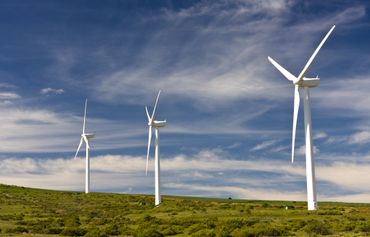
REZs are designated geographic areas with high potential for new clean energy generation and storage, where energy can be efficiently transmitted to the existing power networks. They can be thought of as the new low-emission power stations as they combine: new renewable energy infrastructure, including generators such as solar and wind farms; storage such as batteries and pumped hydro; and high-voltage transmission infrastructure back to the existing power grid.

With the promise of a streamlined approval process, access to better transmission infrastructure, coordinated stakeholder management and potential financial incentives, it is hoped that REZs will address many of the issues that have affected renewables projects over recent years and facilitate the development of large-scale renewable energy projects at a faster pace and lower cost.
The Central West Orana REZ (CWO REZ) transmission infrastructure project in New South Wales reached financial close in April 2025 and is scheduled to be operational by late 2028. It will be the first REZ transmission network in Australia. Through its novel regulated concession structure which seeks to combine features of public-private partnerships and regulated asset models, it will pave the way for future transmission infrastructure to access private capital on an efficient basis and fund the significant capital cost.
Importantly, the NSW government has committed to fostering broad public support for the REZ initiative, particularly in communities impacted by REZ infrastructure, and as a pathfinder project the CWO REZ structure was developed by the NSW government and the Energy Corporation of NSW with extensive input from a range of key stakeholders.
Vital role
REZs will play a vital role in helping to rapidly increase renewables’ share of the generation mix in Australia by delivering key benefits to the public.
* Accelerated renewable energy deployment – REZs streamline many of the essential requirements for project development (including access rights, approvals and grid connection), enabling faster deployment of renewable energy infrastructure, which is crucial for meeting ambitious renewable energy targets.
* Reduced costs – Economies of scale achieved through REZ development lead to lower costs for renewable energy projects. By aggregating multiple projects in a single area, REZs can optimise infrastructure and reduce costs associated with land acquisition, permitting, transmission and interconnection.
* Grid stability – REZs provide a reliable and predictable source of electricity, enhancing grid stability and resilience. The integration of intermittent and distributed energy sources into the grid requires careful planning and management to ensure stability and reliability. REZs address this challenge by providing a coordinated and planned development of renewable energy infrastructure. REZs should result in decreased curtailment, congestion and loss factors that have inhibited renewable energy projects over recent years.
* Economic development and social licence – REZ development creates jobs, boosts local economies and attracts investment in renewable energy. By aggregating the projects within the defined area of the REZ, and witnessing the economic benefits of the REZs, it is also hoped it will better develop social licence between renewable energy developers and the communities where projects will be built, which is critical for renewable energy development.
* Environmental benefits – REZs contribute to emissions reduction and environmental sustainability by enabling the replacement of fossil fuel energy generation.
Nevertheless, implementing these projects is challenging given the large capital requirements, questions on how to fairly distribute that cost, the complexity of the structure and regulatory framework and social licence considerations.
The NSW approach
As significant coal-fired generation in NSW has been retired in recent years, and three of NSW's four remaining coal-fired power stations are scheduled to close by 2037, the NSW government is moving quickly to ensure energy security, with a commitment to invest billions in renewable energy infrastructure, transmission and storage including the development of five REZs across the state. The investment in REZs, which has bipartisan support, is part of a broader policy commitment enshrined in the Climate Change (Net Zero Future) Act 2023 (NSW), which commits New South Wales to cutting greenhouse gas emissions by at least 50% by 2030 and reaching net zero by 2050.
The CWO REZ, the first and most progressed of these zones, was formally declared in November 2021. The ACEREZ consortium comprising Acciona, Cobra and Endeavour Energy, advised by Capella Capital, was confirmed as the preferred network operator in December 2023, and the project reached financial close in April 2025. The CWO REZ will deliver at least 4.5GW of new transmission network capacity, with options to increase network capacity up to 6GW by 2038, two new energy hubs and approximately 240km of new transmission lines. Ten renewable energy and storage projects with a total allocated capacity of 7.15GW have been granted access rights in the CWO REZ, and construction of the transmission infrastructure is expected to be complete by late 2028.
Unique structure
The CWO REZ is a landmark project that involves a unique and innovative approach to energy development and infrastructure financing in Australia. Although similar in structure to an availability PPP model in many respects, it also embraces a collaborative framework that involves multiple stakeholders and unique regulatory and financial arrangements.

* EnergyCo, the orchestrator of REZ development – EnergyCo serves as the Infrastructure Planner for the CWO REZ and future NSW REZs, overseeing the REZ's planning, approval and land acquisition phases. This statutory body is responsible for determining the REZ's network capacity, geographical area and infrastructure requirements. EnergyCo actively engages with communities and key stakeholders throughout the development process to help align interests and minimise disruptions.
EnergyCo also facilitates early activities and regulatory processes prior to financial close, ensuring timely progress and regulatory compliance. It's stated ambition is to coordinate A$32bn of investment into REZs to deliver at least 12GW of renewable energy by 2030.
* Network operator, building and operating the transmission infrastructure –The ACEREZ partnership, selected as the network operator for the CWO REZ through a competitive tender process, is tasked with designing, building, financing, operating and maintaining the CWO REZ's transmission infrastructure. The network operator holds regulatory authorisation from the Australian Energy Market Operator, and bears the responsibility of connecting renewable energy projects to the grid under the access scheme. ACEREZ becomes one of only five licenced network operators in NSW (alongside Ausgrid, Endeavour Energy, Essential Energy and Transgrid).
* Scheme financial vehicle, the funding mechanism – Unlike a typical PPP – where the private sector receives an availability payment from the state or collects revenue directly from a broad public user base – under the CWO REZ structure, the equivalent of an availability payment will be provided by the newly created scheme financial vehicle (SFV). The SFV's role is to make availability-style payments to the network operator as part of its statutory role under the Electricity Infrastructure Investment Act 2020 (NSW) (the EII Act). These payments are funded through payments from distribution network service providers, which passes the cost of the infrastructure through to energy consumers.
The SFV is essentially a pass-through vehicle, and is expected to be the counterparty across all the NSW REZs, giving it considerable liquidity and credit strength. It will also manage the long-term energy service agreements (LTESAs) which may be entered into with generators that are granted access rights to the NSW REZs. It is not backed by a government guarantee, presumably so as not to unduly impact the State's balance sheet, however the State provides initial grant funding to the SFV and some limited support for ongoing liquidity in accordance with the EII Act.
* Access scheme, streamlining network access – The CWO REZ introduces an innovative access scheme, deviating from traditional network access agreements. Generators in the National Electricity Market currently connect under open access arrangements, under which any generator may negotiate connection to the network if certain technical requirements are met. However, these open access arrangements create challenges in coordinating new network infrastructure and consequently investment in generation.
A new access scheme has been introduced for the CWO REZ to help resolve these difficulties, with the aim of promoting efficient network utilisation, a transparent process for project developers and increased investment. Generators and storage providers must acquire access rights from EnergyCo through a competitive tender process run by AEMO Services, as consumer trustee. Ten renewable energy and storage projects have been granted access rights in the CWO REZ through this competitive process to date.
* LTESAs, offering revenue certainty – LTESAs, procured through a competitive tender process, offer developers of renewable generation and storage projects the option of guaranteed minimum revenue, protecting against low wholesale electricity prices and facilitating project financing and risk management.
By being conditional on specific project development requirements, LTESAs are also used as a means of imposing binding social licence commitments on projects.
* Navigating the currents of project finance for CWO REZ – As with other pathfinder transactions, the CWO REZ presented a unique set of challenges, with financiers closely considering complex bankability issues given its large size, funding structure, regulatory framework and need for innovative financing solutions.
Structural considerations
i) Large project size and funding risks. The CWO REZ's substantial size, with limited direct funding support from the state, posed a significant funding task for the private sector, heightened by the novelty and complexity of the structure. To help mitigate this risk, EnergyCo engaged in extensive initial planning in consultation with the private sector to develop a comprehensive risk allocation strategy, which clearly outlined the responsibilities and financial obligations of each stakeholder.
ii) Liquidity finance facility and financing delivery costs. A key tenet of the CWO REZ scheme was that the project would be ultimately funded through ongoing service payments from the SFV, which were in turn passed through to the distribution network service provider (DNSP) and on to NSW consumers. That would, however, only occur once the REZ was built and capable of operation, requiring an alternative financing approach for increased project costs (eg, due to modifications) which would typically be paid and funded by the state in a more traditional PPP.
The solution was to incorporate a contingent liquidity finance facility from commercial lenders to the network operator, designed to cover costs and expenses typically borne by the state during the procurement and delivery phase, such as compensable extension events and modifications. This required careful consideration of: the sizing of the facility, including how to deal with increases in debt and equity contributions to finance such expenses; the facility's utilisation parameters; and its impacts on the project's financial profile and future regulatory approval to service increased payments.
iii) Distributing cost to consumers. Unlike a typical PPP, where the notional debt amortises over the tenor of the concession, the CWO REZ only has modest amortisation during the 35-year concession, with a large residual payment to be paid by EnergyCo to the Network Operator at the end of the concession period (which would largely be applied to repay debt). This reduces the size of service payments to be made over the concession period, and so promotes intergenerational equity by spreading the cost of the infrastructure over the life of the asset rather than placing an undue burden on current NSW electricity users.
However, the inclusion of the residual resulted in more debt being carried within the structure for longer than a typical PPP, exposing the project financiers to more operational and refinancing risk.
iv) Uncertainty around generators and connection assets. The financing of base assets and the role of the network operator in connecting new generation assets introduces some exposure to the project to the risk of delay in, or impacts of, connection. This required consideration of the financing and liability arrangements for generators and connection assets, as well as the network operator's responsibilities in connecting new projects.
v) Augmentation and consent requirements. Given the linear nature of the asset and the potential for expansion, the CWO REZ project structure requires flexibility to facilitate expansion and/or augmentation. As with other large infrastructure projects, this creates tension with equity and debt investors in understanding the risk profile, and required a transparent framework for approving augmentation requests and connecting new generation projects to ensure project efficiency and cost predictability.
vi) SFV structure and creditworthiness. Although EnergyCo was the counterparty to the Project Deed, the SFV is responsible for ongoing payments to the network operator. This unique structure balanced regulatory oversight while implementing a user-pays model, with the cost ultimately passed on to NSW electricity consumers.
The SFV's creditworthiness was therefore an important consideration, assessed on a number of factors, including: the SFV's initial Aa3 stable credit rating from Moody's; the SFV's statutory rights under the EII Act to contributions from DNSPs including a state indemnity for certain change-in-law risk that may impact its ability to recover contributions; the financial stability of the SFV and its risk management framework; and the overall certainty of cashflow for the project.
* Delivery challenges – The size, scale and duration of the procurement, delivery and operational program for the REZs raises a number of delivery challenges for consortium members and procuring authorities.
i) Interface, futureproofing and system strength. While the REZ infrastructure spine can be built on a standalone basis, the connection points depend on the location and scale of generation assets, and the operational capability of the network cannot be fully tested until it is connected into the existing transmission network and/or with generation assets. The REZ infrastructure also requires flexibility to expand over time and accommodate connection of generators of different capacities and load requirements at different locations, all of which influences design and modelling decisions. This raises various delivery issues, such as:
a) The stage at which the design and construction contractor hands over care of the works to the operator including the extent to which the contractor remains on risk until a certain number of generators connect to the REZ infrastructure;
b) When the network operator's service payments should commence and who should take responsibility and risk for delays to commencement including if caused by existing network issues and/or generators not being ready to connect;
c) Who assumes responsibility for accuracy and adequacy of network modelling, particularly in circumstances where the REZ infrastructure connects with, and is dependent on, third-party transmission and generation assets;
d) The extent of required futureproofing of the network, including the extent of redundancy and system strength in the network; and
e) Who should manage the REZ infrastructure connection and integration process with generators including who should design, build and pay for connection assets for generators seeking to connect, given these requirements will persist throughout the term.
Clear allocation of responsibilities and alignment of incentives between consortium members and procuring authorities is required to manage these and similar delivery considerations which affect the bankability profile of the project.
ii) Management of supply chain and pricing risk. There is a global race to secure critical materials, long-lead items and a skilled workforce willing to live and work in remote regions to deliver the energy transition. Challenges to global supply chains, including inflationary and escalation pressures, present significant headwinds to locking in competitive prices and certainty of delivery.
In addition, the novel though well-founded regulatory framework to authorise the network operator to operate the REZ infrastructure and obtain a revenue determination for the statutory-based service payment unavoidably resulted in an extended procurement phase to achieve financial close, placing pressure on financing and supply pricing validity periods and workforce mobilisation.
The adoption of the regulated concession model on CWO REZ seeks to pass significant price and program risk to the private sector on a PPP basis to provide for the efficient delivery, operation and maintenance of the transmission infrastructure, while seeking to spread the overall cost across energy consumers on an intergenerational basis.
Future of REZs
As Australia strives to achieve its net-zero emissions goals, REZs are expected to play a pivotal role in the transformation of the electricity sector, providing a centralised hub for large-scale, fit-for-purpose, renewable energy generation and transmission. They are the low carbon power stations of the future.
The innovative project financing of the CWO REZ represents a substantial and exciting progression in Australia's energy transition journey and sets the stage for the development of several other REZs across the eastern states of Australia. This includes the upcoming New England REZ in NSW, with an intended network capacity of 8GW.
EnergyCo announced the shortlisted consortia for New England REZ in November 2025 – Future Energy Networks comprising AusNet, Pacific Partnerships, GS, Hyundai, Ghella, CPB Contractors, UGL; NewLeaf Energy comprising Iberdrola, Capella Capital, Gamuda, Samsung C&T, Ferrovial, Genus Infrastructure; and Verta Energy comprising EDF Australia.
Those consortia will now progress to the request for proposals stage in the competitive process to engage the New England REZ network operator.
While procurement of the New England REZ is expected to follow a similar contestable structure to CWO REZ, it is anticipated that subsequent REZs will adopt different structures to account for the differing state regimes and particular requirements of the local community. Most of the remaining dozen or so REZs proposed across the states are not expected to be procured through a competitive process and it is expected EnergyCo, or its equivalent in other states, will direct the local network operator to construct and operate the REZ network infrastructure on a non-contestable basis.
Nonetheless, whether funded through private finance or through the local transmission operator, the overall funding task for these major infrastructure projects is enormous, most likely extending into the many tens of billions of dollars.
However, with banks, super funds and private equity players lining up to play a key role in the energy transition, together with the support of governments including the Federal Government's US$20bn Rewiring the Nation programme, we expect there will be significant capital available for the rollout of the REZs over the coming years.

