


Floating solar renewable energy breakthrough
South-East Asia’s geography and demographics strongly favour floating solar projects. We explore the case for them, common hurdles and potential solutions, featuring the Saguling project in Indonesia – the latest floating solar project in the region to achieve financial close. By Jean-Louis Neves Mandelli, Fred Draps and Lim Xi, Ashurst.
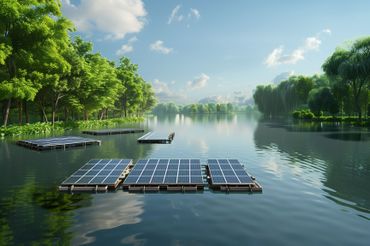
Floating solar projects (FPV) are poised to transition from a novelty into the mainstream across South-East Asia. The region’s geography, climate and demographics favour FPV as land is scarce, population density is high and reservoirs and other water bodies are readily available. For developers and financiers, FPV promises to optimise usage of scarce land and may reduce acquisition and social costs. It also uplifts energy yield and delivers environmental benefits which are highly valued in climate-exposed countries.
At the heart of the FPV value proposition is the optimisation of land use. Ground-mounted solar competes with agriculture, housing, industry, and conservation. In densely populated areas, assembling large, grid-adjacent plots is costly and slow. This dynamic is amplified by South-East Asia’s geography and dense populations. Island and archipelagic states face acute land constraints here whilst fast-growing cities push into high‑value peri-urban zones.
FPV unlocks the use of diverse water bodies, many of which are already under public or quasi-public control. Indonesia, Malaysia, Thailand, Vietnam and the Philippines hold large existing portfolios of state-managed mine tailings ponds, industrial lagoons and reservoirs for hydropower, irrigation, flood control and drinking water which integrate seamlessly with FPV.
Most of these reservoirs are located near substations or transmission corridors, leading to balance-of-plant and interconnection efficiency. Water utility reservoirs near cities also offer short grid runs and lower line losses. Hydropower reservoirs offer distinct synergies: solar farms generate power in daylight while hydropower can be dispatched when it is dark or when demand peaks, creating hybrid generation profiles and better capacity value without the need for new peaking assets or expensive battery storage systems.
In South-East Asia's populous nations, securing continuous tracts of land of sufficient quality and proximity to grid connection points is time-consuming and expensive, often implying complex resettlement processes, multi-agency approvals and prolonged negotiations. By comparison, FPV could offer lower land acquisition costs and reduce social impact. Developers will of course still need to navigate water rights and reservoir management issues, but avoiding large land purchases and resettlement could often be a worthwhile trade-off. Site control becomes less a matter of private land assembly and more a matter of governmental licensing and permitting, which becomes more predictable as the relevant regulatory frameworks in the region mature.
FPV benefits from enhanced energy efficiency due to higher wind speeds, exposure to water and evaporative cooling since photovoltaic modules operate more efficiently at lower temperatures and this effect is more pronounced in tropical South-East Asia. Industry reports typically estimate an increase in yield of between 5% and 15% compared with ground-mounted arrays, all without additional fuel or operating costs. This is an essential benefit in a competitive tariff environment where improvements to margins are highly sought after.
The placement of strongly reflective floating solar panels on water also produces environmental benefits. Partially shading the water body reduces evaporation, preserves freshwater during seasonal droughts and supports irrigation and drinking water storage. It also reduces algae growth by limiting sunlight and moderating water temperature, biodiversity and water quality are consequently enhanced. Such ancillary environmental benefits can be impactful, especially when complemented with sound reservoir management. Through expanding the use case for solar farms, FPV also benefits the environment by promoting a sustainable alternative to fossil fuels.
The modularity of FPV also adds to its appeal. Arrays are scalable and installable in phases, enabling incremental capacity aligned with grid absorption, budgets, and demand. Modular designs simplify logistics, allowing for targeted placement to minimise environmental or navigational interference and enabling future layout adjustments.
These attributes explain why several South-East Asian nations have begun to embrace FPV.
A number of South-East Asian nations, including Indonesia, Malaysia, Singapore, Thailand and Vietnam already have operational FPVs, the largest of which is the 145MW Cirata floating solar project (which achieved commercial operations in 2023), and significant additional capacity is expected to be installed in coming years.
Based on publicly available information, over 12GW worth of additional FPVs is currently under development across South-East Asia, as shown in Table 1.

Particularly noteworthy is the growing acceptance of FPVs from regulators, allowing the such projects to now span a broader range of bodies of water than a few years ago – from artificial reservoirs (both for power production and water storage), to natural lakes and near-shore protected marine areas – as well as to benefit from more supportive regulation.
For example, in Indonesia, it is now possible to secure permits to allocate up to 20% of the surface of an enclosed body of water to FPV. This is a 400% increase on the previous regulatory framework, which allowed only 5% of a body of water's surface to be allocated to FPVs.
FPV is therefore on the cusp of emerging as a mainstream renewable power solution across South-East Asia.
Unlocking floating solar potential
Despite its advantages, FPV also contains distinct challenges that must be managed in order for such projects to be feasible and scalable. There are five challenges.
* Regulatory clarity - The first hurdle is regulatory clarity: is FPV allowed, and on what terms? As different regulatory regimes apply across the different markets in South-East Asia, understanding the regime applicable to FPV in each country is key.
Particularly in first in country projects, sponsors often need to work closely with regulators to develop regulations and standards to allow the development and operation of FPVs.
For instance, Indonesia only recognised FPV as an allowed activity on water reservoirs as recently as 2020 (after the first FPVs had been tendered for development) and initial approvals to conduct these activities were given for a period which was significantly shorter than the design life of the FPV (or indeed the financing arrangements). However, as noted above, even in a short period of five years, the regulatory framework for FPVs in Indonesia has become more permissive, reflecting growing confidence in FPV's benefits, safety and environmental compatibility, but also significantly expanding the FPV installed capacity potential.
* Interface with water resources - A second set of challenges arises from the fact that the FPV needs to be compatible with the water conditions in the body of water in which it is built. As many FPVs are built on reservoirs for water storage or hydropower production, FPVs will need to take into account both changes in hydrology due to natural causes (including floods and droughts), as well as changes in hydrology due to the operation of the reservoir.
While FPVs are usually built to operate across a certain range of water depths, having water levels in excess of the design specifications will be problematic. Planning for these can be particularly challenging due to the uncertainty around weather conditions due to climate change.
Tides, waves and currents also exert forces on the arrays and anchoring and would need to be factored into the plant design. These can be significant in the context of reservoirs which discharge significant amounts of water (such as for power production) but also in case of monsoons or storms (which can result in high waves in large bodies of water, even when these are enclosed).
The strategies we have seen adopted to manage these risks usually include a combination of technical design solutions which allow for the flexibility of expected changes in water level, as well as agreements with the other users of the water areas to coordinate operations. However, as the water resources used by the FPVs may also be needed for power generation or water supply, striking a balance between supporting the FPV without disrupting the use case for the water reservoir, as well as protecting neighbouring populations, can be challenging.
* Underwater conditions - The interface with the body of water can also be challenging during construction. While installing floating solar modules can be done faster than ground mounted PVs, the success of construction often depends on the understanding of the underwater conditions, including the depth, topography and ground conditions.
For instance, artificial reservoirs can make mapping a complex endeavour as they can be very deep, with variable depths, soft sediments and submerged or pre-existing structures. Accurately assessing the condition of the underwater surfaces can also be difficult, as these typically rely on sample-based methods.
As a result, it is sometimes only possible to conclusively assess some of these conditions at the time of construction. There are several strategies we have seen developers successfully adopt to minimise the risk of delays or additional costs arising from unforeseen conditions, such as enhanced and early-stage testing of the anchoring to ensure it is fit for purpose.
* Environmental and social considerations - Water basins over which FPVs are located often sustain local flora and fauna, as well as host human activities.
A key part of developing FPVs is assessing the ecological sensitivities and taking measures to mitigate the impact of the project on local flora and fauna. These measures will affect both the approach to construction (such as by using materials which do not contaminate the water, as well as avian-safe anti-glare panels) but operations (with measures to mitigate biofouling and habitat disruption, as well as ongoing environmental monitoring).
Managing the interaction between the local flora and fauna will also be important to ensure the smooth operation and maintenance of an FPV, as these can affect the aging of the plant and require additional maintenance.
With respect to human activities, developers will also typically undertake social impact assessments to consider an FPV's effect on existing fisheries, aquaculture and other human activities. Depending on the usage of the body of water, significant engagement with local communities may be required to garner support for the project and develop mitigation and action plans.
Consideration will also need to be given to how to mitigate the impact of these other human activities on the FPV. In a similar way to the approach taken to coordinate the operation of water and hydropower reservoirs, understanding the potential effect of local communities' activities on the FPV will be an important part of the development strategy, but the mitigation can be more challenging as oftentimes it is not feasible to enter into coordination arrangements with local business owners such as small fisheries.
* Operational factors - The floating nature of the assets means that FPVs face specific operational issues.
At a basic level, the equipment required to conduct operation and maintenance differs from ground-mounted solar as inspections require vessels and floating walkways and, in some cases, diving equipment. Debris control and biofouling management replace vegetation management. String testing, inverter maintenance, and cleaning will have to be conducted with marine safety protocols in mind.
Electrical equipment will require extra protection from humidity, condensation, and corrosion; cable routing must accommodate wave motion and thermal expansion. Array movement, anchor tensions, and mooring integrity are each to be monitored, with preventative maintenance in place and aligned to seasons and, where relevant, reservoir operations.
Project insurance policies will also need to address aquatic risks such as storms, floods and collisions.
Saguling project
The 92MWp (60MWac) Saguling floating solar project in West Java, Indonesia, is the most recent floating solar project to have reached financial close in Indonesia and is currently under construction.
Saguling sits on the Citarum river cascade upstream of the Cirata and Jatiluhur dams and is central to regional water and power systems.
Developed by a consortium comprising ACWA Power and PT PLN Indonesia Power, it is expected to begin commercial operations in late 2026.
Saguling is first-in-kind on several fronts: the first floating solar IPP financed by Deutsche Investitions- und Entwicklungsgesellschaft, a German development finance institute, and Proparco, a French DFI; the first Indonesian Just Energy Transition Partnership solar project to be financed via blended finance from both the public and private sectors; and the first industrial-scale FPV to be delivered by ACWA Power, a Saudi Arabian developer, investor and operator of power generation and desalinated water plants. The flagship project which bears the status of a national strategic project, benefits from a 25-year power purchase agreement with the state-owned electric utility company PT Perusahaan Listrik Negara. It is also the second industrial-scale FPV to reach financial close in Indonesia.
From a site suitability standpoint, Saguling presents several advantages. It is a man‑made reservoir with controlled boundaries and clear public ownership, stewarded by the water and energy authorities. Its proximity to hydropower grid infrastructure simplifies interconnection, introduces transmission efficiencies and enables hybrid, complementary solar and hydropower operations. The water surface provides ample space for modular arrays while preserving navigational channels and buffers around hydropower structures. However, Saguling’s water level fluctuations require adaptively engineering anchors, moorings and arrays, designed to durably withstand significant changes in water levels.
A significant impetus for the Saguling project is its contribution to sustainable development. The plant is expected to reduce carbon dioxide emissions by approximately 104,000 tons annually. The co-location of solar generation atop a hydropower reservoir supports Indonesia’s 2025–2034 RUPTL (Electricity Supply Business Plan) target of achieving a solar power capacity of 17.1GW by 2034.
Conclusion
While FPV has been successfully developed in South-East Asia, their specificities result in regulatory and practical complexities which require careful planning and structuring to ensure a bankable structure and risk allocation. However, those FPVs successfully project financed in South-East Asia to date – of which the Saguling floating solar project is the latest – shows that once a track record of these projects starts to develop across the various jurisdictions, it can pave the way for significant increases in FPV installation, facilitating the development of large-scale solar power which is more efficient, as well as cheaper and faster to build.
