


Great days for gas
Changing power demand dynamics are offering new opportunities in the natural gas world. From M&A, to midstream and upstream activity, to greenfield power plants, 2026 will see a continuation of the boom of 2025. By Nic Stone.
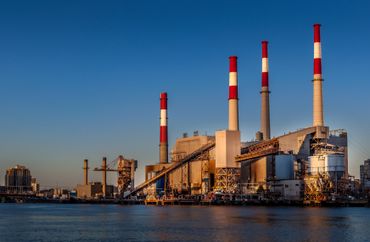
Natural gas and gas-fired power have been the sticking plaster for all sorts of issues over the past decade; a way to lower power prices, a bridge fuel to net zero, and more recently as a way to feed the massive energy demands for tech-related infrastructure and data centres.
“Natural gas today is the most important technology to power North America’s energy needs,” said Avik Dey, president and chief executive officer of independent power producer Capital Power, at the company’s investor day in Alberta, Canada. “Today the need for natural gas has never been more pronounced.”
The numbers, by now, are well known. The US will require at least 100GW of new electricity capacity to power AI alone by 2030. “Natural gas is cleaner, faster, more efficient, and more economic,” Dey continued from a stage in Alberta. “What that means in our view is that we ultimately need more natural gas.”
The natural gas industry will be one of the main beneficiaries of increased power demand; from extraction, to storage, to transportation, to generation. The US Energy Information Administration forecast natural gas consumption in the country will increase by 1% to set a record of 91.4bn ft3 per day in 2025, a number they expect to grow again in 2026.
“What we’ve seen specifically over the last two years is the need for an all of the above solution for power needs,” said Gerry Willinger, managing director, Marathon Capital. “You can’t build a data centre without committed power and that is becoming more broadly recognised – power is the largest stumbling block or pinch point for the industry.”
To solve this issue, the year started in the US with an M&A boom for gas-fired power plants that has hardly abated as companies looked to shore up some power supply in the shape of existing projects. Then there was also the dealmaking in the midstream and upstream world as companies looked to solidify supply. The year continued with a series of announcements about conversions to existing sites, such as coal-fired power plants, to run on gas and provide cleaner power.
The year ended with the first financing of a greenfield gas-fired asset since 2022, when Kindle Energy and GE-backed Wolf Summit Energy closed a US$1.1bn project financing backing the 609MW Wolf Summit gas-fired combined-cycle plant in West Virginia.
The increase in opportunity in the gas world saw sponsors like Capital Power and advisers and investment banks like Marathon Capital up their activity in the space.
“This trend is already here,” said Capital Power’s Dey. “Over the past three years we’ve seen a 50% compound annual growth rate increase in capex going out towards this initiative, so we are just getting started in this trend.”
2025’s M&A boom
The underlying trend in 2025 was a move towards M&A in the gas world, as companies looked for the fastest and cheapest way to get electrons, which meant opportunities for sellers, buyers and their advisers.
“What we are seeing is a massive uptick in CCGT and peaker interest in M&A markets. A lot of M&A volume is starting to happen as companies look to buy existing inventory. We are seeing a really significant M&A volume uptick,” said Marathon Capital vice-president Patrick Brandt, whose investment bank saw a shift from renewables advisory to more gas-related advisory as the year went on.
The year started with the creation of the largest IPP in the US specifically created to provide baseload power for data and tech needs. Nuclear-focused power company Constellation Energy agreed to buy Calpine Corp for US$16.4bn in one of the biggest acquisitions in US power industry history. The deal, which included debt, valued Calpine at US$26.6bn.
Several factors were driving the attractiveness of M&A. “Gas-fired generation is more expensive than it's been, with costs having more than doubled over the last five years due to the limited supply of gas turbines, a constrained supply chain, and much higher EPC costs,” said NextEra Energy chief executive officer John Ketchum earlier in 2025.
There were series of noteworthy portfolio and company deals done. ArcLight Capital Partners acquired power developer and manager Advanced Power and made an initial US$1bn equity commitment to build new power infrastructure.
The partnership has the potential to invest more than US$5bn of equity over the next five years to enable over 20GW of new power and accelerate AI and data centre infrastructure growth, with a portfolio in Pennsylvania.
Most companies use a crude doubling calculation when they think about leverage for these deals, meaning at least another US$5bn could be raised in debt markets backing this buildout.
Partners Group agreed to acquire a 1.9GW portfolio of 11 natural gas power plants in California from Avenue Golden Continuation Fund as well as Middle River Power, the company that operates the assets. The transaction values the portfolio and Middle River at an enterprise value of US$2.2bn. Middle River will continue to operate the assets.
There was an emergence of smaller, asset-specific deals as the year went on. “As of late 2025, the industry is transitioning from a period of unprecedented megadeals to a more focused approach on mid-cap and asset-level transactions, with a notable pivot towards natural gas assets,” according to a report from MarketMinute.
Blackstone Energy Transition Partners bought the 774MW Potomac Energy Center in Virginia and the 620MW Hill Top Energy Center in Pennsylvania this year. Maryland-based Hull Street Energy agreed to acquire six units of J-Power's Elwood Energy unit, the owner of a 1.3GW gas-fired power plant located near Joliet, Illinois. Elwood comprises nine units in total.
Capital Power, in its landmark deal, agreed the US$2.2bn purchase of the 1.12GW Hummel and 1.02GW Rolling Hills power plants in PJM from LS Power. The deal “establishes a foothold in the largest and most liquid North American power market with strong fundamentals for natural gas power generation”, the company said at the time.
Capital Power paid seven times' annual projected Ebitda, below the eight times forward multiple where it currently trades, according to the company's presentation and LSEG data. And while these M&A deals were for operating assets, they all included plans to deploy more capital and for new construction.
Swimming upstream
It wasn’t just downstream where the activity was. For Marathon, that offered up an opportunity, especially in the face of a renewables industry that had the wind taken out of its sails by the passage of the One Big Beautiful Bill Act and the dashing of certain incentives and governmental support.
“The building out of the power systems needed, especially for these data centres, fits really well into the Marathon approach,” said Willinger. “We can provide offtake advisory, tax advice, financial advice, and more. This all fits in very well with companies needing connectivity, whether it is to the grid or behind the meter power or gas supply.”
Marathon was key in one late-year deal in the space. Overwatch Capital and Idemitsu Kosan entered a strategic partnership to support the development of AI data centres across 10 US states, which will include raising project-specific financing, with Idemitsu providing natural gas for the buildout.
Marathon Capital served as exclusive financial adviser to Overwatch in the formation of this partnership. The partnership combines Overwatch’s SIDE Platform with Japan’s Idemitsu’s entry into US natural gas supply.
“The first question we get from companies is about speed to power and when they can get it,” said Marathon CEO, Ted Brandt. “When can things be turned on? How much base load power do they need? What is the source? Eventually companies will want grid supply so what is the bridging mechanism and how does that stay in place?
“And for Marathon, it was the idea that we can be the balance sheet to help meet that requirement. We are seeing more and more complex partnerships being developed. Developers want to know how they can get it done and what are the partnerships to be formed to get it done.”
The collaboration Marathon advised on includes an investment by Idemitsu into Overwatch Capital and the launch of Idemitsu’s nationwide natural gas supply operations in the US, which aims to solve the issue of powering the vast needs of data centres.
Through the partnership, Idemitsu will supply natural gas to on-site power generation systems capable of providing up to 1GW of natural gas to support the next generation of AI driven data centres. The sites will use Overwatch’s SIDE Platform, which integrates on-site natural-gas generation, battery storage, advanced cooling, and proprietary energy management systems to create hyper-scalable sites.
Overwatch anticipates starting two projects in 2026, Resilience Dallas–Fort Worth in Texas and Resilience Columbus in Ohio. The partnership will ensure firm, long-term natural gas supply for tenants across Ohio, Texas, Illinois, Utah, Colorado, Arizona, Georgia, Nevada, South Carolina and Pennsylvania, powering high-density AI compute through both grid-connected and private-grid models.
“What we are hearing more and more is you have to bring your own power. If you want to be served by utilities you need to come up with novel solutions as there is no spare capacity,” Ted Brandt said of the deal.
Marathon’s advisory homed in on the fact that the Overwatch deal was in a high demand area, Willinger added, saying that the Plano and Dallas Fort Worth areas, where the deal will concentrate on to begin with, provide the deal with some site security.
Other deals were getting done at year-end too. NextEra Energy Resources entered into an agreement to acquire Symmetry Energy Solutions from Energy Capital Partners. The deal is expected to close in Q1 2026, subject to customary regulatory approvals.
Symmetry provides natural gas supply, storage and asset management solutions to a broad range of end users nationwide. The company is one of the leading suppliers of competitive natural gas in the United States, serving approximately 5,500 large commercial and industrial customers and 80,000 residential and small customers across 34 states.
While further upstream, there is activity too. “This shift is not merely a cyclical event but a fundamental recalibration, as companies seek to optimize their portfolios, secure dwindling prime drilling inventory, and fortify their positions against market volatility and evolving energy demands,” MarketMinute reported.
“US natural gas and liquefied natural gas companies will likely boost their capital expenditure and expand their shale acreage, driven by rising data centre demand and supportive LNG export policies,” according to Deloitte’s 2026 Oil and Gas Industry Outlook.
A greenfield return
If 2025 was the year for M&A and jockeying for position, then 2026 could be the year that more greenfield deals come to market.
Some 50 gas-fired plants are in pre-construction or are under construction across the country, according to Global Energy Monitor, with a combined capacity of close to 30GW. Tracking gas turbine orders suggests that some 30GW of gas turbines have been ordered and are expected to reach the US by 2028, according to S&P.
The Wolf Summit financing, closed at the end of 2025 and the first PF deal for a new-build since 2022, could provide a template. Santander, MUFG, Societe Generale, Truist, Mizuho, CIBC, BNP Paribas, and CoBank were the seven banks in the club deal, which comprises a US$1bn construction plus five-year term loan and a US$110m construction plus five-year revolving credit facility.
Overall costs are more than US$1.37bn for 80% leverage. Banks each took a US$140.4m ticket in the deal. MUFG provided a deal contingent hedge ahead of financial close, allowing sponsors to mitigate interest rate risk, while CIBC was sole issuing bank. Kirkland Ellis advised sponsors, with Milbank advising lenders.
The Wolf Summit plant is being built under an EPC management structure, with Blackstone-backed IPP Kindle’s in-house construction team overseeing execution while major scopes are delegated to subcontractors. Commercial operation is expected by the end of 2028.
Elsewhere, Blackstone formed a joint venture with PPL, a utility headquartered in Allentown, with plans for the joint venture to invest in new natural gas power generation facilities in Pennsylvania to provide electricity for AI and data centres. PPL Electric Utilities, PPL’s regulated utility subsidiary, also has plans to invest nearly US$7bn in transmission and distribution infrastructure through 2028.
The Edison Electric Institute said in a statement that the Blackstone/PPL tie-up “to build, own, and operate new natural gas-based, combined-cycle generation stations to power data centers under long-term energy services agreements with regulated-like risk profiles…do not expose the companies to merchant energy and capacity price volatility.”
Capital Power, fresh from its M&A push, closed out the year signing a memorandum of understanding with Apollo-managed funds for a US$3bn investment partnership to pursue merchant natural gas generation acquisitions in the US.
The MoU contemplates an equity commitment of up to US$2.25bn from Apollo and US$750m from Capital Power, with Capital Power getting a 25% to 50% working interest in each acquisition. Considering leverage that can be obtained on deals in the market, the duo will look to debt-finance some US$3bn of funding, taking its overall war chest to US$6bn, said Dey.
Homer City Redevelopment and Kiewit Power Constructors have announced a more than US$10bn plan to repurpose the 3,200-acre site of the former Homer City coal-fired power plant in Pennsylvania to a data centre campus powered by gas-fired generation. The sponsors plan to seek project finance to support the plan.
The project will deliver up to 4.5GW of power to support AI-driven hyperscale data centres. An initial capital investment is projected to exceed US$10bn for power infrastructure and site readiness, and data centre development is expected to cost "billions more", the companies said.
Knighthead Capital Management, on behalf of certain entities it manages and advises, has had significant equity positions in Homer City for nearly eight years and will lead project financing. Homer City representatives declined to comment on the project finance plans.
Similar conversion deals could emerge elsewhere. The site of GenOn Holdings' former Cheswick coal-fired plant in Springdale, Pennsylvania is under contract with a data centre developer, according to the Pittsburgh Tribune-Review.
Liberty Energy is developing dedicated power generation to data centres and other large-load customers at an 875-acre industrial park in Washington County’s Robinson Township, also in Pennsylvania.
Even NextEra, which earlier in the year was bullish on M&A, started to make moves in the new-build space. In December, the company and Basin Electric Power Cooperative signed an MoU to explore jointly developing a 1.45GW combined-cycle gas-fired power plant in Basin Electric's North Dakota service territory.
Elsewhere in the US, the list of companies looking at coal power plant sites is expanding: Google has repurposed the Widows Creek coal plant in Alabama and Amazon is planning a data centre campus at the site of the Birchwood power station in Virginia, among others. ArcLight Capital Partners-backed power portfolio Alpha Generation has submitted plans to supply 450MW of electric generation at four existing power stations AlphaGen manages across Maryland, New Jersey and Ohio.
And all of this leads into the attractiveness of real assets for investors, of which natural gas assets are enjoying a moment. “In a world where attention is increasingly digitally focused, real assets could become more valuable than ever,” according to a report from RBC.
“We believe the recent surge in capital deployment towards datacentres and power & utilities is only the beginning of a sustained reliability and security premium that real assets are set to command.”
The trends that started in 2025 will not be bucked in 2026. But the M&A deals that positioned major players in the market will now likely give way to investment in growing their portfolio of power generation assets, while also investing in and establishing a firm supply of gas.
